"The pages are still blank, but there is a miraculous feeling of the words being there, written in invisible ink and clamoring to become visible." -Vladimir Nobokov
Showing posts with label writing advice. Show all posts

Sunday, November 18, 2018

On Finishing.

Last Sunday, I finished the first draft of my novel.

Wow. It feels really weird to write that. It feels weird, because "Write a novel" has been one of my New Year's Resolutions every single year since I was about 13. And 2018 is the year that I can finally cross it off my list. That's a really, really good feeling.

Messy hair, bad lighting, but a very happy writer!
Needless to say, I learned a lot of things about craft and productivity and my own very flawed process in the writing of this book, so I thought I'd share them here. In fact, some of these things directly contradict the lessons I mentioned in the blog post I shared at the halfway point. That's one of the things I love most about writing: there is always, always more to learn.

1. I'm a slow writer, and that's okay. This draft took me two and a half years to write. That's a long time, and not exactly ideal, especially since published authors usually produce work on much tighter deadlines and I want to be one of those someday. What you don't see in those two and half years are the looong stretches between writing sessions. The waffling. The dragging of feet. The distraction. To give you a sense of my pace, I reached the "halfway point" (40,000 words) on January 15th of this year. It took me 9 months to write what some people write every November. I don't say this to disparage myself, but to remind myself that even the slowest writers can still finish. I would love to write faster. I think, with more discipline and less procrastination, I can write faster. But I will never be one of those people who writes several thousand words a day. I will never "win" Nanowrimo, because a prolonged effort of 1,600 words a day just isn't doable for me. What writing this book taught me was how to work within my own sporadic productivity, and that writing at my own pace, especially for a first attempt, is perfectly okay. So if you're feeling overwhelmed by Nano this month, just remember that every writer writes differently - and if we didn't, what a boring world it would be.

2. Planning is Key. I said in my "halfway point" blog post that I thought I'd found my ideal planning method. Well, let's just say, it wasn't enough. I wrote this book with a loose outline that was really just a list of scenes I thought should be in the book somewhere. That's a good start, but it was not nearly enough momentum to keep the story moving forward. It wasn't so much the dreaded middle that tripped me up, but the last third. I'd left most of my ending scenes blank, thinking that I would figure it out as I went along. Bad idea. It's really hard to write the somewhat compelling, halfway-decent ending you're hoping for in your first draft, when you realize the whole book has been building up to....something?? That's a lot of pressure and a lot of stuff to figure out at the last minute. For my next novel I'm planning to do way more outlining. My characters need clearer motivations. They need the escalation of problems. They need (or rather, I need) an end in sight.

3. Reading More = Writing More. Let it be known, this doesn't always work, but when it does, it works wonders! If I'm reading a good book, I'm almost always more likely to want to write. Sometimes I find myself picking up a book, reading a couple pages, and then immediately feeling the urge to write. (Or, well, think about writing and then work up the motivation to actually open the document. I'm being real here, guys.) I always tend to write more when I am actively reading something, especially if I'm enjoying it. When the delicate ecosystem of inspiration and creative output is in balance, the writing feels almost effortless.

4. Commit, commit, commit. Honestly, most of what got me though this process was commitment. Commitment to telling this particular story. Commitment to seeing this draft through to completion. On a smaller scale, commitment to getting to the next word count milestone, whatever that might be. Writing a novel is an endurance sport for your brain, so it's vital that you have little markers along the way. I'd always write more on the days when I could see the next milestone ahead of me, just out of reach. I'd sit down with the specific intention of finally hitting 10K or 20K or 30K and I'd actually follow though. I was at 78,000 words last Sunday when I decided that that I was going to finish this thing no matter what. I ended up writing 6,000 more words (the most I've written in one day, ever), just so I could type "The End." But this doesn't just apply to the final stretch. There were plenty of times when I could have stopped for the day at 9,000 or 59,000 or whatever, but I wanted to make it the next 10K milestone, so I pushed through the resistance. I wrote 2,000 words on an airplane once just so the person next to me would ask me if I was writing a novel! (They did, by the way.) (Is that embarrassing to admit? I don't know.) Getting through a first draft is not just about committing to the whole, gargantuan undertaking. It's also about finding those smaller moments where you can commit to just getting to the next level, and then pushing through the resistance to get there.

5. Trust the process, and trust yourself. There's not a writer on the planet who doesn't feel self-doubt. There were times when I felt like everything I was writing was crap. Sometimes a whole month would slip by, and I hadn't written a word. It was in these moments that I'd feel bad about myself and my work, and it felt impossible to face another blank page. "Trust the process" is not new advice, but it's so important. The more you write, the easier it gets. I slowed down considerably towards the end of my draft, partly because I was still clutching at vague ideas for my ending, but also because my self doubt kicked into high gear. I thought that if I couldn't do the novel justice in the last section, all that hard work would have been somehow wasted on a story with a disappointing ending. I inched forward at a snails pace, until finally, I decided to just go all in, and trust that things would work out. I figured out the ending as I went, and it was such an adrenaline rush, writing those last  few thousand words. So when you're feeling full of self doubt, remember that the only way to get through the fog is to keep writing, because every word you write is proof that you are worthy of the task. That's you trusting the process. When it feels like the story is rebelling, and you don't know if you can fix the problems you've created for yourself, you have to trust that future you will know how to fix them. That's you trusting yourself.

Writing is the process of muddying a perfectly crisp blank page, and then working to turn the smear into something beautiful. It will never be as perfect as the original clean slate, but who wants it to be? Writing this draft taught me that perfection isn't the goal: completion is.

So. There you have it. I hope this little list was helpful to those of you trying to get through a first draft. It's hard, y'all. But it's doable. This book still needs a ton of work (I predict a full re-write and a lot more research), but I'm proud of myself for doing the work. Now, whenever I feel the self doubt monster creeping in I can tell myself: I've done it once. I can do it again.

I've done it once. And I will do it again.

Happy Writing!

Sunday, February 23, 2014

Go-To Inspiration

This blog post is coming to you from my messy brain in my messy dorm room in the midst of my messy life. I've been feeling a little overwhelmed lately. I have so many projects I want to work on. There's school of course, but I'm also trying to step up the discipline in my writing routine. I'm working several work-study jobs, writing for two different blogs (this one and my college's English department), and beginning the search for a summer job in my hometown. Plus, there's a super secret project I can't stop thinking about, and I don't know if it's really worth the time to undertake it or if this is just the honeymoon period. Maybe the excitement will wear off and I'll start hating it, and hating myself for not committing to it, and end up more stressed than when I started.

All of this was causing some creative burn-out, until I stumbled upon this blog post from The Secret Life of Writers. The question it asks is simple: What images will always make you want to write? I've always loved the idea that inspiration is everywhere, but I assumed it was something you had to wait for, that you'd never see it coming. I guess I'd picked up on patterns in the past, but I never saw them as something reliable to turn to when I was at a loss for ideas. Following in the same vein of Heather's post, I thought I'd share a few images that continually make me want to open up a word document and pour my heart out:

1) These paintings by Cy Twombly that hang in The Menil Collection in my hometown:


2) Medieval Tapestries


3) Open windows with white curtains
Photo by Sarah Jane on Flickr

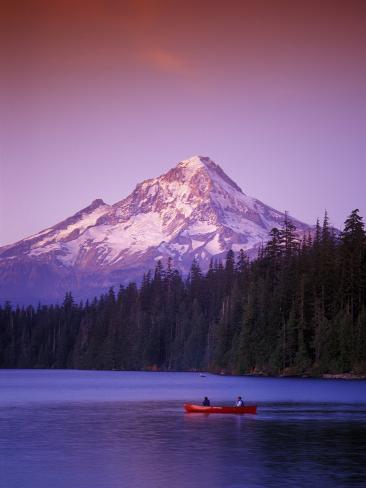
4) Lone canoers on a lake 


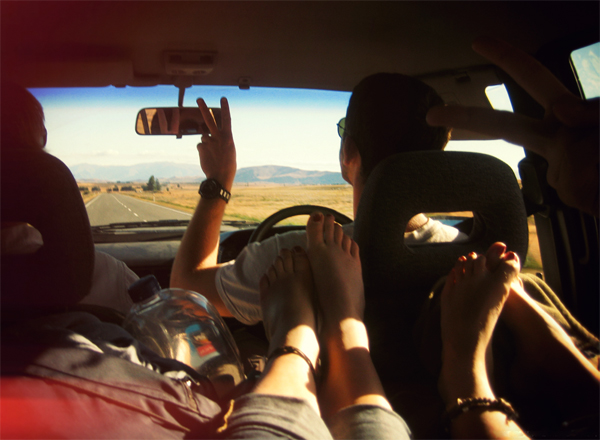
5) Road Trips


6) Obscure vintage photography

7) Abandoned houses


I really enjoyed compiling this list, and I hope you find some of these things inspiring as well! Lightning strikes of inspiration are great, but remember, there are always things in your life that inspire you simply because you are drawn to them over and over again. Use these things to your advantage!

Lastly, I would just like say thanks to Heather Marie for her original post. While I too am inspired by things like castles and statues in cemeteries, I had never really dwelled on the mystical qualities of the lighthouse.

Let me know what things inspire you in the comments, and as always, thanks for reading!

Saturday, April 6, 2013

Putting Advice into Practice

I was looking at the tags on my posts the other day, and I realized that it has been a VERY long time since I actually talked about writing in any kind of helpful, organized way. There's also the fact that the tag "life" pops up more than "writing in general," which bothers me a little bit since, well, this blog is supposed to have at least some useful information on it. So, without further ado, here's some advice... about taking advice.

For the record, I LOVE advice. I'm the one who is constantly wasting time I could be using to write (or, you know, do homework) by looking up writing advice. But of course the one caveat of knowing how to write well, is that you actually have to put that advice into practice. In order to help you do this, I've gathered up a few of the most generic writing tips on the internet and am giving you my own perspective on what they mean.

Write Every Day
Ah yes, this seems to be the standard piece of writing advice. It 's simple. You want to write? Well then, what are you waiting for! But if you're anything like me, just being told to write isn't enough. I need details. How long should my writing sessions be? Should I set a word count goal? How do I write everyday without severely jeopardizing my grades? What if I only write two sentences every day for a week? What happens if I skip a day? Two? Three? You get the gist. Now, this is going to seem a little counter intuitive, but let's just forget about the whole "write every day" thing for a minute. Sure, setting a schedule for yourself is great, but you really only need to write every day if just getting yourself into your desk chair is a struggle. If you're more confident with your writing, you start to feel guilty after you've gone a long time without writing anything. Hopefully the urge to write will naturally occur. That doesn't necessarily mean you should write only when you feel like it. Use your time wisely; if you have a small stretch of time where you would normally watch Youtube videos, try writing instead. By using whatever available time you have and also freeing yourself from the cycle of guilt that is trying to write every day and failing miserably, you are going to be a lot happier with yourself and with the result of your efforts.

Show don't Tell
You've heard this one a million times, I know. In describing this technique most people use an example like this:

Showing: Julie was getting angry when James walked through the door.

Telling: Julie's face turned beet red. He eyes bulged and an insult was already forming on her lips when James walked through the door.

Even when I'm given an example, I have a really hard time showing instead of telling. While first drafts will always be riddled with places where telling is rampant, one thing I've noticed that has helped me learn the difference is taking time to notice things. If you make a conscious effort to observe the details of your life, then writing them will be a lot easier. Pay attention to the way people act when they're happy, angry, sad, tired. Pay attention to the way the first day of summer smells, or the feeling your get when you're sitting in an empty movie theatre waiting for the film to start. As you do this you will discover that you are more inclined to include the details of your character's emotions rather than just telling your readers their state of mind.

Write What You Know
There is a lot of truth to this phrase. Where would we be if Anne Frank or Louisa May Alcott or Harper Lee had decided not to write what they know? However, when I first tried to follow this advice I couldn't think of anything in my life that would be worth putting into a story (obviously I got over that and started a blog). What I've realized is that writing what you know doesn't mean you have to write a memoir about your life, or that you can't work in a fantasy or sci-fi genre. It just means that, whenever possible, you should ground your stories in a reality that you know something about. Why have a character who is a genius chess player if you've never played a game of chess in your life? Sure, you can acquaint yourself with the world of chess by teaching yourself how to play, attending chess tournaments, etc, but wouldn't be nice (and a lot less work) to have your main character love the same thing you love? This also serves as a good rule for writing about things you can't possibly "know". Say you've set your story in New Orleans during the 1920's. If you want your story world to be authentic, you need to know as much about that place and time as if you were actually living it.

Well, that's all I have time for today. Since I don't do very many of these writing advice posts, I'd love to hear if you thought this was helpful or not. Feel free to leave questions, comments, and constructive criticism in the comments!