So I always seem to have a lot of thoughts around the beginning of the new year: resolutions and goals and lots of wishy washy feelings around my birthday and what I want my life to look like in 2018 and all those fun existential questions. I've been working on a blog post about people who inspire me and who I think are going to do really great things in 2018, but that post just isn't going to happen yet, because I want to it to be as concise and well-written as possible (and there's a lot of people to profile!). So you're getting this instead, which I'm sorry to say is just a snapshot of my brain right now. Here goes.
1. Reading slumps. Ironically, I've been in a bad reading slump ever since I started working at a bookstore. I think it's because I've gotten so used to describing books to people that it makes me feel like I've already read them. Trying not to put too much pressure on myself and let myself fall back in love with reading when the time comes.
2. Days off. Since starting a full time job my attitude toward days off has completely changed. I used to think that I had to use my weekends to DO things - I had to be productive and go on adventures. I still want to go on adventures sometimes, but I don't feel quite as guilty for sleeping in or spending an entire afternoon reading. Today I literally wrote in my planner that I wanted to spend at least 2 hours curled up with a book. Now my days off feel like this magical, special time that's just for me to do whatever I want with. And it's a really nice feeling.
3. 2018 Bucket List. Okay, I know I just said that I feel less guilty about using my days off to actually relax, but one of my goals for 2018 is to do more activities that I love but don't get to do very often. Mostly things like kayaking, roller skating, and being outside. Some other things on my list are: become a regular at an establishment (coffee shop/library/bookstore), go rock climbing (nerve wracking because I'm not sure how I feel about heights, but it also looks really fun), and visit a museum/gallery I haven't been to yet. So yeah, I think I'll be happy if my days off are about 60% recharging, 40% putting in that little bit of extra effort in to go somewhere and do something new.
4. Writing. I had a bit of an epiphany the other day. I realized that writing itself, putting words on the page, isn't difficult. The hard part is everything that surrounds writing: the self doubt. The stress over deadlines. The wrestling with one idea over another. Every day we come to the page with all of this baggage, and every day we have to wrestle it to the ground just to even begin. It's exhausting. As soon as I embrace this fact that the physical act of writing is easy, the fear and self doubt don't have as much power over me. *Disclaimer*: That's not to say that figuring out story and character and revision isn't mentally strenuous, because it is, but in the first draft putting words on the page is so much easier if you don't have to deal with all the mental angst. I've been trying to focus on just putting one word after the other, and so far it's been working.
5. Turning 23. My birthday is the day after tomorrow, and I'm honestly surprised about how calm I feel about it. 22 was a weird birthday for me. It felt like the year I was "officially" a twenty-something, no turning back. I know there's never any turning back, but 20 and 21 still felt like a part of teenager-dom, you know? Anyway, I'm looking forward to a relaxed birthday surrounded by the people I love most in this world, and really, what more could you want?
6. This blog. I've had a lot of thoughts about where I want this blog to go in 2018. I want to post more, obviously. I want to write more about my writing process, and hopefully give some advice that might be helpful. I want to write less rambly and thought-dumpy posts and more thoughtful essay-like posts. (With obvious exceptions, because sometimes you just need to write down everything that's in your head. Case in point.) I want to share more photos of places I've been, and find more creative ways of conveying information. I want this to be a warm space, a comfortable space, a space for feeling and thinking and being curious. That's really what I want for 2018 in general.
Today was the first day in two weeks that the sun came out. Even though it was colder than most Texans would think possible, it was a beautiful, clear-eyed day. The kind of day where the sky is so bright that it doesn't look real and the air so cold that it bring tears to your eyes. The kind of day where you look at the sunset, a smear of pale yellow and rose petal pink, and can't tell if you're crying because of the cold or because of the beauty or both. Here's wishing you many more days like that in 2018. (Maybe a little warmer.)
Wednesday, January 3, 2018

Thursday, November 30, 2017
End Of Year Thoughts
2017. The year I graduated college. The year I started a job at a bookstore. The year of Hurricane Harvey. The year I witnessed the sun slip into blackness; the year I was surrounded by a 360 degree sunset. My first winter in four years without seeing snow. Hopefully the year I finally finish the first draft of a novel. A transition year - half in school, half in the "real world."
I've always been more inclined to look forward than to look back. Reflecting on the past does not come naturally to me. Whenever I try, the days come back to me in a hazy blur and I think, "Was that this year? Was that yesterday? Was that last month?" It's around this time of year when I start making plans in earnest. I ready my planner for January. I draft lists of resolutions. I prepare to re-set my life, take stock, even if it rarely lasts more than a couple of weeks. This year, though, 2017 feels like unfinished business. I'm not ready to be catapulted into the wilds of 2018. I have too much to finish, and for once, it feels like some of those goals I made this time last year are actually within reach.
I don't really know what this post is supposed to be. Probably just another vague post about "something coming," about all that potential that I'm just barely learning how to grasp onto. Sometimes I feel like I'm always on the cusp of productivity, of figuring out what it is I want, of the next big project. I'm never in the middle, I'm always just starting out. Or maybe it just feels that way because in my own idealistic way, everything feels like beginning. Maybe I'm in the middle and I don't even know it.
What I'm really trying to do is remind myself to move slowly, take it all in. Not to spend so much time planning for the future that I miss the present.
The present is this:
-Fall color in the leaves (finally)
-Christmas careening toward us in all its tinselly glory
-Sitting in warm coffee shops and jotting down bits of other people's conversations
-Wrestling with big writing projects, mapping how much I need to write every day if I want to finish by December 30th, veering wildly between thinking I can do it and thinking it's an impossible, inhuman task
-Writing rambly blog posts just to get myself back into the habit
-Coveting clothes I can't afford; falling in love with Juniper scented candles, even though I've never been the kind of girl who has the urge to burn candles; trying not to fall prey to the consumerism of the season
-Tentatively listening to my Christmas playlist, then deciding I'm not in the mood for Christmas music and listening to something else; wondering when the Christmas bug will bite me this year
-Working on carrying everything deeply, all at once
-Devolving into sentimentalism
-Signing off now
For those of you still reading, I'm sorry for the word vomit. Feel free to comment your own wishy-washy seasonal feelings below.
Monday, October 2, 2017
Letter to October #2

Dear October,
I am surprised, again and again, by things coming back to me. This morning I sat in a coffee shop, and didn't write, even though I meant to. This is not the first time I have chosen to do the opposite of what I know I want. It will not be last. This is certainly not the last time I will tell you about it, October. Instead, I wrote in my car on my lunch break. I was sitting in my car with the air conditioning on because sitting in the park I had gone to was getting too hot because it is still ninety degrees here.
This morning, at the coffee shop, when I was supposed to be writing, I asked about a ring I had lost a few weeks ago. I love wearing rings, but like sunglasses, I have a tendency to lose them. Anyway, it was a long shot. The barista wanted to know what kind of stone it was and I felt silly for asking about a $6 ring that had been missing for weeks, but I told her it looked like an opal. And suddenly there she was, holding it out to me.
I've been thinking about why some things return to us and others don't. Why we're plagued by the same problems, but we don't recognize them. Why good things happen again and again, and we're surprised by them. Why is it when we set out to do something, it makes it harder to do it? Why is it that something as simple as getting a ring back can feel so gratifying, like some piece of the universe has clicked back into place?
I took more pictures today then I have in a long time. I took a picture of my coffee cup, the flowers climbing up a telephone pole near the bookstore, droplets of rain on my windshield. These letters make me notice more, October. That's another kind of return. A return to who I am in October, the girl who takes note. I wonder what else I've been missing.
Laura
Song of the Day: The Water by Johnny Flynn and Laura Marling
Letter to October #1

Dear October,
Well, here we are again. You arrived on my day off, which was lovely. It wasn't until I started a real job that I understood the true meaning of a good day off. Even when I was in school I didn't cherish weekends the way I cherish a free day now. It doesn't have anything to do with not liking my job (I love it, in fact), but everything to do with suddenly relishing the gift of free time in a way that I hadn't before.
This morning I went to brunch with friends and felt like a millennial, I guess, though I don't really know what that means. It's still weird to me sometimes, hanging out with people as though it were still summer, as though it was just another year. But it's not summer. And my friends have jobs now, and we're not waiting for the next semester to start, we're out there making life happen.
All summer I would wake up and think to myself, "This is your life now." It wasn't a resignation or a defeat, but a reminder. A reminder that I'm not waiting for anything anymore. A reminder that I could go in any direction. Now, I don't have to remind myself as much. It's amazing how quickly we adapt, how ready we are to inhabit whatever space is provided us. I thought I wasn't ready for you, October, but I guess it's only a matter of time.
Laura
Song of the day: Midway by Bad Bad Hats
Saturday, September 30, 2017
Letters to October Announcement!
Hello Everyone! Sorry I've been gone for a little while. Luckily you'll be hearing from me a lot more frequently in the next few weeks, because it's that time of year again: time for Letters to October. For those of you new to this little tradition of mine, it was inspired by Emily Diana Ruth's Letters to July and Carrie Hope Fletcher's Dear Autumn series. Each day I write a letter to the month of October, and pair it with a picture I took that day and a song I've been listening to. It's a little project that helps me take stock of how my life has changed, and helps me notice more, instead of letting the days slip past without a second glance.
I don't want to get too sentimental too soon, but a lot has changed since my last Letters to October in 2015. I've graduated college, moved back home, and started a job at my favorite independent bookstore. In the past my Octobers were filled with mounting stress as the semester's work load got more intense. Now, I'm working full time and my days, while stressful at times, are more structured than they were at school. I was also in Iowa, where the transition to fall was obvious - blustery days, changing leaves, a biting chill to the air. Now I'm back in Texas, where we're lucky to get a handful of cooler days, and we don't get true fall colors until December.
Needless to say, I'm excited to see where this year's Letters will take me. I hope you'll join me, and I'd love it if you made your own! If you're so inclined, you can read past letters in the Letters to October tab.
Until tomorrow!
And, just for fun, here's a song of the day: Die Young by Sylvan Esso
Saturday, August 26, 2017
Eclipse

On the drive east my mother read Annie Dillard’s essay “Total Eclipse” out loud to us in the car. We were on our way to Tennessee to catch the total solar eclipse of 2017, or the Great American Eclipse, as all the news stations were calling it. (I wonder why we are still attaching the words “Great” and “American” to anything) My parents had been planning this trip since last August, when they booked our hotel rooms in a town just outside of Nashville. As my mother read, I got more excited and apprehensive about seeing the eclipse.
The Annie Dillard essay is a masterpiece of suspenseful descriptive language. It puts you on edge and makes you want to crawl out of your skin. I have no pretensions that this blog post will even come close, so you should stop what you’re doing and get your hands on Ms. Dillard’s essay as soon as possible. That being said, I can’t let this momentous occasion pass without writing about it. It’s not often that something comes along that is completely outside the confines of lived experience. Outside of reading about it, there is no way to know what an eclipse will be like because it messes with our most basic experiential knowledge: the cycles of day and night; the behavior of shadows, birds, insects; the feel of the sun on a hot day. At the same time, our imaginations are so willing to fill in the gaps that I was almost worried about the eclipse being anti-climactic. I needn’t have worried.

The only other activity we had planned for our short time in Nashville was to visit Parnassus Books. Parnassus was co-founded by one of my favorite authors, Anne Patchett, after the closing of her favorite independent bookstore. It’s nestled in an unassuming brown stucco strip-center, which it shares with a Chipotle and Fox’s Donut Den. Even on a Sunday, the place was bustling. People were everywhere: chatting about books, availing themselves of the armchairs at the center of the store, and tripping over the shop dog, who looked ancient but could move surprisingly fast. Maybe the crowds were because it was eclipse weekend (and all of Nashville was packed), but I’m hoping it was because bookstores are making a comeback. I wandered the shelves in a daze, caught between my usual bookstore state-of-mind (focused and methodical) and being swept up by the buzz of excitement in the room. Standing in that bookstore felt like standing on the precipice of something: maybe because I’ll be starting my own job at an independent bookstore in less than a week, or maybe because bookstores have always been places of potential energy for me. There’s the potential of finding the perfect book, but also the feeling, as a writer, that behind each one of those books is a person, a person just like me. Or maybe the rush of excitement in the bookstore was part of something larger, some collective energy that was sweeping the city at the same speed that the moon was hurtling in front of the sun.
The next day, the day of the eclipse, we rose early. Really early. Everywhere else in the city had been so crazy that we wanted to take exactly zero chances with any of it: the traffic, the crowds, the mayhem. We had gotten tickets for an eclipse party hosted by Wildflower Farms an hour outside of the city. We drove through the rolling hills of Tennessee, the rising sun a giant orange orb in the sky. It made me want to see an eclipse like that, where the atmospheric distortion turns the tiny ball of the sun into a colossus. We passed farm house after farmhouse, and I wondered if any of these people had plans to go outside during the eclipse. It was all over the news, impossible to miss, but I wondered if anyone was still in the dark, unaware of what was about the happen. Champagne colored light filtered through the low-hanging fog in the fields on either side of us. We wound our way through the countryside toward the impossibly tiny town of Bethpage, where we turned onto an even smaller road, barely wide enough for two cars to pass each other. We almost drove right past our destination. It was a barn normally used for weddings, sitting in the middle of a wide field. Of course, we were the first people there.

As the morning wore on, more people started to arrive. They came from lots of different places: Indiana, Kentucky, Washington, DC. We tried out our eclipse glasses, staring at the small orange circle climbing towards the center of the sky. One of the other eclipse watchers had brought his camera and a telephoto lens, and he and my parents swapped camera-talk. It was amazing, how easily these people felt like friends. We talked about what we knew of eclipses, and my mom and I urged everyone to read the Annie Dillard essay. A few people worried about the light, fluffy clouds gathering on the horizon. Would they obstruct our view? Would we miss our chance? That’s what this felt like. A chance. A thing that we all cared enough about to drive however many hours for, for just a minute or two – a handful of seconds really – of something extraordinary.
Every “live” event that’s experienced now is experienced in two places: online and offline. (How strange that we call it a “live” event when all of our events are live, simply by virtue of us living them). An hour before totality where we were, my instagram was littered with crescent shaped shadows from the people experiencing a partial eclipse, and then images of the sun and the black thumbnail of the moon blotting it out.

In our own slice of reality, the light was changing. It happened slowly. The light was dimming, turning sepia colored. It felt a bit like looking through a weak pair of sunglasses. My mom stared at me and said, “Your hair looks redder.” The next thing that happened was the temperature change. Even though it had just been 94 degrees, and standing in the sun felt uncomfortably hot, now it was almost pleasant. Summer to fall in a matter of minutes. Someone told us that it had gone from 94 to 81. My mom counted down the minutes to totality out loud. None of us knew where to look. I watched the horizon, hoping to see the shadow of the moon slam into us. Hoping to see the hard line between day and night. It didn’t happen that way.
Instead, it was as if someone was sliding a dimmer switch in the sky. The blue of sky deepened in a matter of seconds. A chill shot through the air. The horizon glowed tangerine with sunset no matter where we looked. My head snapped back and I saw it. The corona around the moon where the sun used to be. In all the pictures of solar eclipses I’ve seen, totality looks flat, just a white ring around a black disk. In real life, a kind of tunnel vision happens, as though everything else is suspended from that one tiny spot in the sky, and we’re hanging there, necks craning, hoping whatever is holding us in place doesn’t break and we go spinning out into space. Suddenly the world around me, the grass, the trees, felt foreign and inconsequential compared to the orb hanging above us in the sky. I was vaguely aware that it felt like something out of a sci-fi movie, the closest thing to a sci-fi movie that I think I’ll ever experience in my life. One of our new friends had brought a white towel which they laid out on the grass. On it, you could just barely see slim, silvery shadows flickering across the surface. This, I had read earlier, was caused by the sunlight diverting around the peaks and valleys on the moon. Atmospheric distortion caused the shadows to dance and flicker, like light in the bottom of a swimming pool.

We were submerged in night for two minutes and thirty-nine seconds, but it felt much shorter. As I watched, a spear of light appeared on one side of the disk, and then, in a matter of seconds, the daylight returned. The whole experience was a bit like submerging yourself in murky lake water on a sunny day. For a few minutes everything is brown and moss green, maybe you catch the mysterious glimmer of a fish eye as it glides silently past, and then you come up for air and the world is bright and sparkling and new. Around us, the world returned to its dusty sunglass-tinted state, but it was such a change from the twilight we’d just experienced that it felt like everything had just snapped back into place. The only tell: air that was unnaturally cool for midday in August.
It felt as though the world righted itself much quicker than it had come undone. Maybe the anticipation was gone. Maybe our brains had already filed away our new experiences, and so it knew what to expect. We hung around for a little while, retreating to the barn where it was shady and cool as the heat returned. We exchanged contact information with our fellow eclipse-watchers, promising to share the pictures we’d taken. And then people began to tickle back to their cars, back to their normal lives.
It’s difficult to say what impact this experience will have now that it’s over. I hesitate to call it life-changing, because my life hasn’t changed one bit. But it is significant. It does tell us something about the universe, ourselves. First of all, the eclipse reminded me that the universe is a system. It’s like the gears in a gigantic clock, moving so fast that we can’t see them, can’t even fathom them. The eclipse momentarily slowed one of those gears down, let us witness it in all of its silent, calculated grace. A glimpse like that comes so rarely that we have to take every opportunity we can to experience it. I expected to feel small in the wake of the eclipse. I expected to recognize how tiny I was compared to the vastness of space. But I didn’t feel that. Instead, I felt closer to it somehow. The eclipse was strange and intimate, like someone telling you a secret that makes all of their behavior suddenly make sense. I feel more knowledgeable, like I’ve gained some new insight into how things work, even if that’s only the knowledge of what it’s like to see the world momentarily go dark. Maybe it’s silly to feel this way, but I do. Maybe it’s silly to travel hundreds of miles for something that lasts under three minutes. Maybe it’s silly to marvel and laugh and gasp with strangers, to take a million photos, and make lofty analogies about something as simple as the moon moving in front of the sun. But if that’s silly, then count me in. Because that is togetherness, and wonder, and knowledge, and power, and I’ll take that over cynicism and boredom any day. Especially hot days in August, when the sun blinks and the earth is cool again.

Monday, August 14, 2017
The Search for the Perfect Campus Novel: Part One
College campuses are ripe grounds for a novelist: you've got characters being thrust into a new way of life, rites of passage, and a rich intellectual playing field. I became enamored with campus novels largely out of frustration. I found myself picking up them up over and over again, but usually I found them so pretentious I could hardly stand them. I feel like a have pretty strong tolerance for intellectualism – I'm excited by it, actually – but many of the novels I read had characters who quoted Milton from memory, translated the Greek classics for fun, and were also just terrible people.
Even so, many of the campus novels I've read stuck with me, to the point where I tend to ask if people have read certain books just so I can have someone to discuss them with. And thus, an obsession was born. I'm on the hunt for the perfect campus novel. Something that doesn't feel overly pretentious, has likable characters, and that perfectly calibrated studious atmosphere that makes campus novels so fun to read.
This is the first installment of a series of posts where I'll share my thoughts on the campus novels I read, and what better time to start than August and September, when, for the first time in my life, I'm not going back to school.
Below are the books that got me into the genre; the good, the bad, and the ones I wanted to throw across the room.
 1. The Secret History by Donna Tart
If you google "campus novels" this will inevitably turn up. It's one of the most popular campus novels of all time, and despite my personal reservations, I have to admit that it deserves to be on the list. The Secret History follows Richard Campden, a California boy who moves to New England to go to an elite private college. There, he falls in with a mysterious bunch of classics majors under the influence of a morally corrupt professor. What follows is a slow burning, volatile, maddeningly illusive story that tells you something is going to happen only to have it completely shatter your expectations.
I loved the first half of this book. The atmosphere is perfectly eerie: you feel the old-world sophistication and the grandeur of the campus buildings; the isolation the characters face during a particularly snowy winter; that strange, warm quality found in oaken rooms filled with books. During the second half, though, it started to fall apart for me. Characters who I found flawed but fascinating became almost unbearable. Moral questions posed in the first half were batted away as easily as flies. As the characters' lives spiraled downward, so did my enjoyment of the book.
And yet. And yet. I can't stop thinking about it. Images from The Secret History have stayed with me long after I gave it two stars on Goodreads. I find myself wanting to discuss it with everyone I meet. And what is that if not the sign of a particularly good book? My final verdict: The Secret History is well crafted. It is an undeniable feat of suspense and tension, and a fascinating portrayal of privilege gone wrong. By the end, you may just want to hurl it across the room.
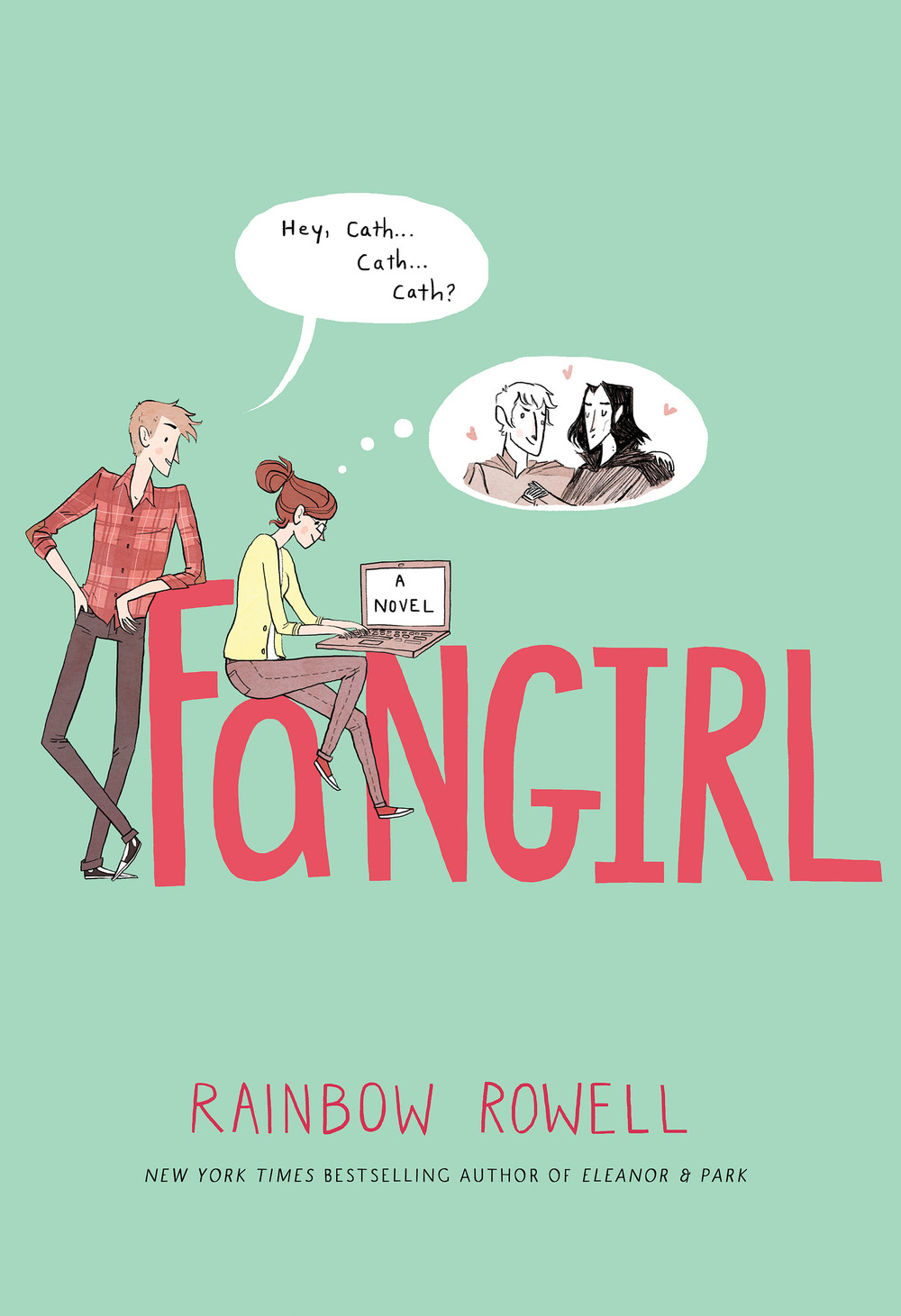 2. Fangirl by Rainbow Rowell
This book could not be more different than The Secret History. They might very well be polar opposites. Fangirl follows Cath, a freshman in college who is a super-fan of Simon Snow, a book series with overt similarities to Harry Potter. Cath is extremely shy, and is more inclined to stay in her dorm room and write fan fiction than go out and socialize. But a loner can't stay that way forever. With the help of a judgmental (and yet oddly likable) roommate, a hard-ball professor, and of course, a guy, Cath begins to come out of her shell.
Fangirl is light and funny, but also a poignant portrayal of anxiety and loneliness. I've heard that some readers are annoyed by how much Cath overthinks things, but if you have that tendency, too, her character will most likely ring true. Rowell is tender with her characters, making you like them despite their flaws, and you delight in all the ways Cath grows, and the tiny steps she takes to being more outgoing, letting more of herself show. Unlike the other books on this list, this is a truly optimistic one, and one of the rare books I found myself grinning at whenever I picked it up. If you're looking to read about a college experience that feels refreshingly realistic and modern with a dose of humor, Fangirl is it.
 3. The Magicians by Lev Grossman
The Magicians is often billed as "Harry Potter for adults," but in my mind that doesn't quite fit. Maybe: "Harry Potter if Harry Potter were intensely apathetic and studying magic was not as easy as it looked." That's not to say I didn't enjoy this book. Like The Secret History, The Magicians left me with a lot to think about. The book follows Quentin, a high school senior who grew up reading a Narnia-esque series of books about the magical land of Fillory. Upon graduating, he is unexpectedly accepted into Brakebills, a - you guessed it- magic school. What follows is an erratically paced journey through their four years at Brakebills, and their struggle to survive after returning to the real world, where magic is an intensely useless skill. If you're looking for the in-depth, perfectly plotted world of Harry Potter, this is not that book. But, if you're curious about how someone else might conceive of a magical school where learning magic takes patience, effort, and skill (and failure is frequent), and you like reading about the struggles of disillusioned youth, this is the book for you. That may sound flippant, but there's a lot of substance here, and it stayed with me long after I read the last page.
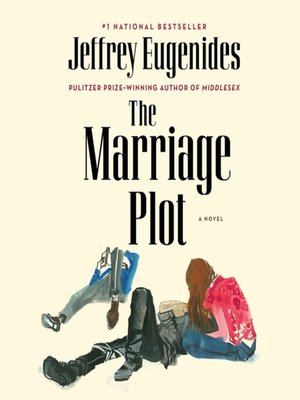 4. The Marriage Plot by Jeffrey Eugenides
This is the only book on this list that I flat-out didn't like. I read it in my marriage plot class, right after reading five or six marriage plots, from Jane Eyre to Emma. This book is supposed to be a semi-modern take on the marriage plot structure, but I found it to have the same constricting effect on its characters as the marriage plots we read in class. It follows Madeline, Mitchell, and Leonard as they are in their last year at Brown University during the 1980s. The book opens with Madeline, but spends a lot of time with Madeline-obsessed Mitchell Grammaticus (yes, that's his real name *gag*) and manic-depressive bad-boy Leonard. The book seems more concerned with their emotional and psychological journeys than Madeline's. All of the characters are obsessed with the writings of the deconstructionist theorist Derrida, and in its own attempt to deconstruct the marriage plot, it seems only to point out its own shortcomings in being unable to do what its 19th century predecessors could. In short, Jane Eyre is more feminist than The Marriage Plot.
 5. Tam Lin by Pamela Dean
This book is still somewhat of an enigma for me. It's billed as a modern re-telling of the sixteenth century Scottish ballad, Tam Lin, but if you're looking for modern/urban fantasy, this is not it. I went into it knowing nothing about the original ballad, and came out of it only slightly more educated. What is interesting, though, is her portrayal of life on a college campus in the 1970's. Her complex cast of characters are interesting and witty, and literary references abound. The joy Dean takes in having her characters quote Shakespeare I think makes up for any pretentiousness - it's obvious that she loves literature and revels in it throughout. At 456 pages, this book is not for the faint of heart, but if you go into it with the right expectations, it's a highly enjoyable read.
 6. Prep by Curtis Sittenfeld
I tried to read Prep on the recommendation of my friend Ruth (who usually gives great recommendations), but I just couldn't get into it. However, that doesn't mean that it isn't worthy of being on this list, and a recommendation this emphatic could not go unnoticed. Here's what Ruth has to say:
"Prep is about a girl who lands herself at an elite boarding school, and finds herself very out of place with the wealthy, self-assured people around her. We follow her through her four years at school as she observes the social, racial, and class divides there, and see how she reacts.
Here's why it's good. This is a book that feels authentically high school, with the same cringe moments and awkwardness of being a teenager. Ever small thing seems so big. The book is narrated by an adult Lee, looking back on her high school years, but for the most part you forget she's the narrator. As a teenager Lee is perceptive, sharp, and self-conscious, and has a gift for observing other people and dissecting their actions. She's particularly insecure as a freshman but one of the best parts of the book is going through the 400+ pages and noticing her language and perspective change. She takes action more often, gets better at articulating her own feelings, and acknowledges and is confronted by the limitations of her perspective. The book moves at a pace that makes this really interesting – slow enough for her to feel just the same, but quick enough for you to see her expand her idea of who she is and what she's capable of. Every scene in this book feels uniquely its own, and builds up slowly, with all the nuances of interaction and dialogue of something that happens in real life.
I have so much affection for this book because some of Lee's conclusions, or observations she makes about life, you read them and you think, 'ha, that's kind of funny,' because it's a little melodramatic, or a little oh – high school. But they resonate almost more so because they're acute observations that are sincere and vulnerable, easy to criticize but there anyway. It's that kind of naivety and honesty that makes Prep fascinating to read."
There you have it. I'll keep you updated on my next campus reads, and hopefully I'll find some gems in what (so far) has been a mixed bag. Currently Reading: The Starboard Sea by Amber Dermont
Even so, many of the campus novels I've read stuck with me, to the point where I tend to ask if people have read certain books just so I can have someone to discuss them with. And thus, an obsession was born. I'm on the hunt for the perfect campus novel. Something that doesn't feel overly pretentious, has likable characters, and that perfectly calibrated studious atmosphere that makes campus novels so fun to read.
This is the first installment of a series of posts where I'll share my thoughts on the campus novels I read, and what better time to start than August and September, when, for the first time in my life, I'm not going back to school.
Below are the books that got me into the genre; the good, the bad, and the ones I wanted to throw across the room.
If you google "campus novels" this will inevitably turn up. It's one of the most popular campus novels of all time, and despite my personal reservations, I have to admit that it deserves to be on the list. The Secret History follows Richard Campden, a California boy who moves to New England to go to an elite private college. There, he falls in with a mysterious bunch of classics majors under the influence of a morally corrupt professor. What follows is a slow burning, volatile, maddeningly illusive story that tells you something is going to happen only to have it completely shatter your expectations.
I loved the first half of this book. The atmosphere is perfectly eerie: you feel the old-world sophistication and the grandeur of the campus buildings; the isolation the characters face during a particularly snowy winter; that strange, warm quality found in oaken rooms filled with books. During the second half, though, it started to fall apart for me. Characters who I found flawed but fascinating became almost unbearable. Moral questions posed in the first half were batted away as easily as flies. As the characters' lives spiraled downward, so did my enjoyment of the book.
And yet. And yet. I can't stop thinking about it. Images from The Secret History have stayed with me long after I gave it two stars on Goodreads. I find myself wanting to discuss it with everyone I meet. And what is that if not the sign of a particularly good book? My final verdict: The Secret History is well crafted. It is an undeniable feat of suspense and tension, and a fascinating portrayal of privilege gone wrong. By the end, you may just want to hurl it across the room.
This book could not be more different than The Secret History. They might very well be polar opposites. Fangirl follows Cath, a freshman in college who is a super-fan of Simon Snow, a book series with overt similarities to Harry Potter. Cath is extremely shy, and is more inclined to stay in her dorm room and write fan fiction than go out and socialize. But a loner can't stay that way forever. With the help of a judgmental (and yet oddly likable) roommate, a hard-ball professor, and of course, a guy, Cath begins to come out of her shell.
Fangirl is light and funny, but also a poignant portrayal of anxiety and loneliness. I've heard that some readers are annoyed by how much Cath overthinks things, but if you have that tendency, too, her character will most likely ring true. Rowell is tender with her characters, making you like them despite their flaws, and you delight in all the ways Cath grows, and the tiny steps she takes to being more outgoing, letting more of herself show. Unlike the other books on this list, this is a truly optimistic one, and one of the rare books I found myself grinning at whenever I picked it up. If you're looking to read about a college experience that feels refreshingly realistic and modern with a dose of humor, Fangirl is it.
The Magicians is often billed as "Harry Potter for adults," but in my mind that doesn't quite fit. Maybe: "Harry Potter if Harry Potter were intensely apathetic and studying magic was not as easy as it looked." That's not to say I didn't enjoy this book. Like The Secret History, The Magicians left me with a lot to think about. The book follows Quentin, a high school senior who grew up reading a Narnia-esque series of books about the magical land of Fillory. Upon graduating, he is unexpectedly accepted into Brakebills, a - you guessed it- magic school. What follows is an erratically paced journey through their four years at Brakebills, and their struggle to survive after returning to the real world, where magic is an intensely useless skill. If you're looking for the in-depth, perfectly plotted world of Harry Potter, this is not that book. But, if you're curious about how someone else might conceive of a magical school where learning magic takes patience, effort, and skill (and failure is frequent), and you like reading about the struggles of disillusioned youth, this is the book for you. That may sound flippant, but there's a lot of substance here, and it stayed with me long after I read the last page.
This is the only book on this list that I flat-out didn't like. I read it in my marriage plot class, right after reading five or six marriage plots, from Jane Eyre to Emma. This book is supposed to be a semi-modern take on the marriage plot structure, but I found it to have the same constricting effect on its characters as the marriage plots we read in class. It follows Madeline, Mitchell, and Leonard as they are in their last year at Brown University during the 1980s. The book opens with Madeline, but spends a lot of time with Madeline-obsessed Mitchell Grammaticus (yes, that's his real name *gag*) and manic-depressive bad-boy Leonard. The book seems more concerned with their emotional and psychological journeys than Madeline's. All of the characters are obsessed with the writings of the deconstructionist theorist Derrida, and in its own attempt to deconstruct the marriage plot, it seems only to point out its own shortcomings in being unable to do what its 19th century predecessors could. In short, Jane Eyre is more feminist than The Marriage Plot.
This book is still somewhat of an enigma for me. It's billed as a modern re-telling of the sixteenth century Scottish ballad, Tam Lin, but if you're looking for modern/urban fantasy, this is not it. I went into it knowing nothing about the original ballad, and came out of it only slightly more educated. What is interesting, though, is her portrayal of life on a college campus in the 1970's. Her complex cast of characters are interesting and witty, and literary references abound. The joy Dean takes in having her characters quote Shakespeare I think makes up for any pretentiousness - it's obvious that she loves literature and revels in it throughout. At 456 pages, this book is not for the faint of heart, but if you go into it with the right expectations, it's a highly enjoyable read.
I tried to read Prep on the recommendation of my friend Ruth (who usually gives great recommendations), but I just couldn't get into it. However, that doesn't mean that it isn't worthy of being on this list, and a recommendation this emphatic could not go unnoticed. Here's what Ruth has to say:
"Prep is about a girl who lands herself at an elite boarding school, and finds herself very out of place with the wealthy, self-assured people around her. We follow her through her four years at school as she observes the social, racial, and class divides there, and see how she reacts.
Here's why it's good. This is a book that feels authentically high school, with the same cringe moments and awkwardness of being a teenager. Ever small thing seems so big. The book is narrated by an adult Lee, looking back on her high school years, but for the most part you forget she's the narrator. As a teenager Lee is perceptive, sharp, and self-conscious, and has a gift for observing other people and dissecting their actions. She's particularly insecure as a freshman but one of the best parts of the book is going through the 400+ pages and noticing her language and perspective change. She takes action more often, gets better at articulating her own feelings, and acknowledges and is confronted by the limitations of her perspective. The book moves at a pace that makes this really interesting – slow enough for her to feel just the same, but quick enough for you to see her expand her idea of who she is and what she's capable of. Every scene in this book feels uniquely its own, and builds up slowly, with all the nuances of interaction and dialogue of something that happens in real life.
I have so much affection for this book because some of Lee's conclusions, or observations she makes about life, you read them and you think, 'ha, that's kind of funny,' because it's a little melodramatic, or a little oh – high school. But they resonate almost more so because they're acute observations that are sincere and vulnerable, easy to criticize but there anyway. It's that kind of naivety and honesty that makes Prep fascinating to read."
There you have it. I'll keep you updated on my next campus reads, and hopefully I'll find some gems in what (so far) has been a mixed bag. Currently Reading: The Starboard Sea by Amber Dermont
Subscribe to:
Posts (Atom)